
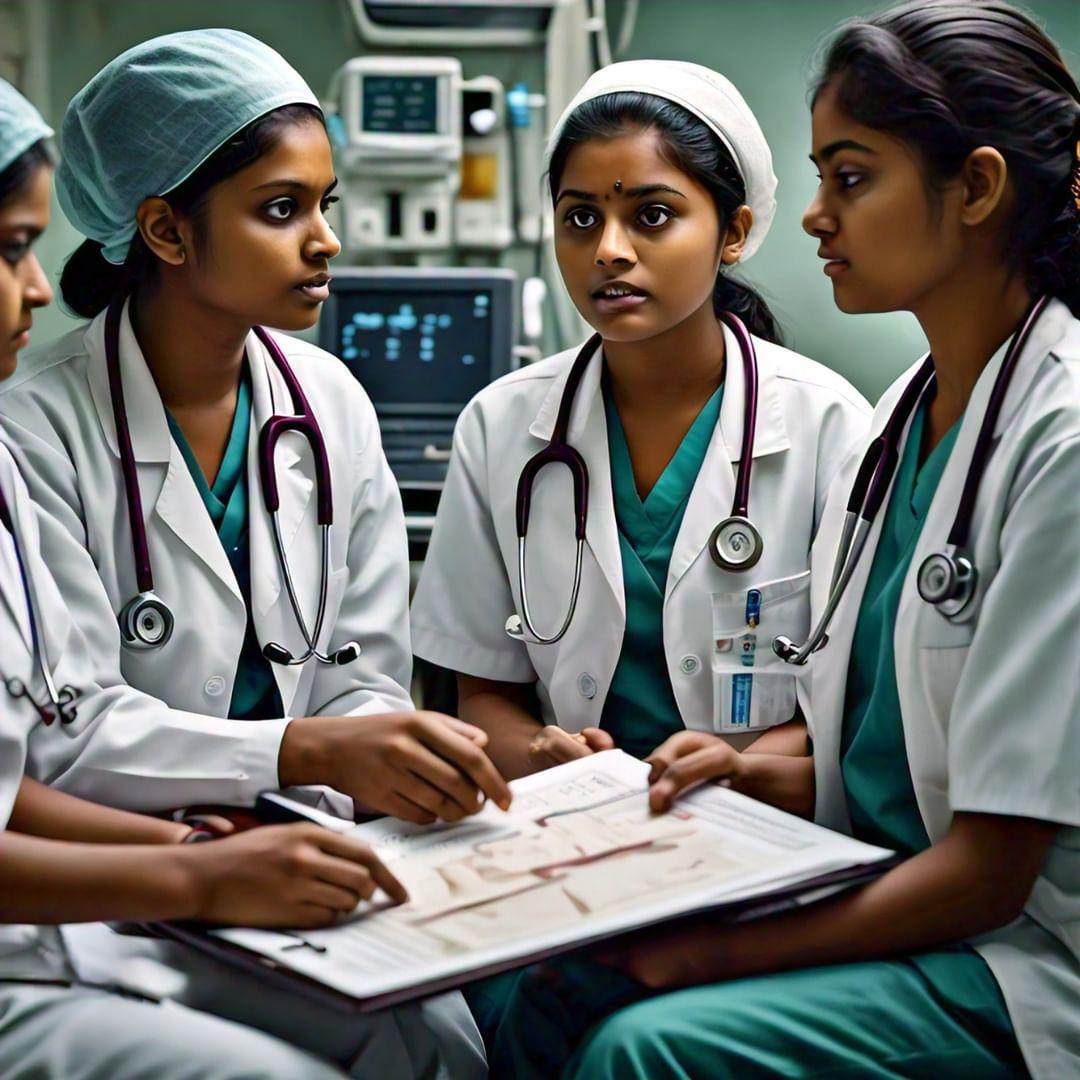
BSc Medical Sociology Course Details College Details
B.Sc. in Medical Sociology: Course Overview, Admission, Syllabus, Top Colleges, Jobs, and Scope (2025)
Course Overview
A Bachelor of Science in Medical Sociology is an interdisciplinary course that explores the relationship between society and health. It examines how social factors, cultural beliefs, and institutional practices affect health outcomes and healthcare delivery. This program typically spans 3 years and is designed to provide students with theoretical knowledge and practical skills necessary for analyzing and addressing health-related issues in various social contexts.
Admission Process
- Candidates must have completed 10+2 in any stream (Science/Arts/Commerce) from a recognized board.
- A minimum aggregate score of 50% is generally required.
Eligibility Criteria:
- Merit-Based: Most colleges offer admission based on 10+2 marks.
- Entrance Exams: Some universities may conduct entrance exams or interviews to assess candidates’ suitability for the program.
Admission Procedure:
- Students should check the specific college/university website for application forms and important dates.
- The application typically includes submitting academic records and any required entrance exam scores.
Application Process:
Syllabus
The syllabus for a B.Sc. in Medical Sociology may vary slightly between institutions but generally covers the following core subjects:
Year 1:
- Introduction to Sociology
- Principles of Epidemiology
- Sociology of Health and Illness
- Research Methodology in Sociology
Year 2:
- Health Policies and Programs
- Medical Anthropology
- Sociology of Medicine
- Quantitative and Qualitative Research Methods
Year 3:
- Health Communication
- Global Health Issues
- Social Determinants of Health
- Project Work/Internship
Top Colleges for B.Sc. in Medical Sociology
- University of Delhi
- Jawaharlal Nehru University (JNU), Delhi
- Tata Institute of Social Sciences (TISS), Mumbai
- Banaras Hindu University (BHU), Varanasi
- Panjab University, Chandigarh
- Manipal University, Karnataka
Job Opportunities
Graduates with a B.Sc. in Medical Sociology can pursue various job roles in healthcare, research, and community services. Some potential job profiles include:
- Medical Sociologist
- Public Health Researcher
- Health Policy Analyst
- Community Health Worker
- Health Educator
- Health Services Manager
- Epidemiologist
- Data Analyst in Health Research
Scope and Career Prospects
The scope for graduates in Medical Sociology is vast, given the growing emphasis on social determinants of health. They can find opportunities in:
- Healthcare Institutions: Hospitals, clinics, and public health organizations.
- Research Organizations: Conducting studies on health behaviors and community health.
- Government Agencies: Working on health policy formulation and implementation.
- Non-Governmental Organizations (NGOs): Engaging in community health initiatives and awareness programs.
With the increasing focus on holistic healthcare and the recognition of social factors influencing health, professionals in this field are likely to be in high demand. Graduates can also consider pursuing higher studies (e.g., Master’s or Ph.D.) for advanced roles in research and academia.
Salary Expectations
- The average salary for a fresh graduate in Medical Sociology may range from INR 3,00,000 to INR 6,00,000 per annum.
- With experience and higher qualifications, professionals can earn between INR 7,00,000 and INR 12,00,000 per annum or more, depending on their role and the organization.
Conclusion
A B.Sc. in Medical Sociology offers valuable insights into the interplay between society and health, equipping graduates with skills to contribute meaningfully to healthcare and community welfare. With diverse career opportunities and a growing focus on social health determinants, this field presents promising prospects for future professionals.